Thinking about East Quogue and keep hearing “south of the highway” and “north of the highway”? If you are relocating from the city, the shorthand can be confusing. You want the right mix of beach access, value, and a lifestyle that fits your daily routine. This guide breaks it down in plain English so you can compare neighborhoods, understand tradeoffs, and shop with confidence. Let’s dive in.
What locals mean by “the Highway”
In East Quogue, “the Highway” refers to Montauk Highway as it runs through the South Fork. Homes south of Montauk Highway stretch toward the bay, dunes, and the Atlantic, including Dune Road and nearby oceanfront and bayfront pockets. Homes north of the Highway are inland, with more suburban and rural areas. East Quogue sits between Quogue to the west and Westhampton Beach to the east, and village rules can differ once you cross into those municipalities.
South of the Highway: lifestyle and housing
Beach access and vibe
If daily beach time is your priority, the south side is where you will likely focus. You are closer to ocean beaches, bayfront launch spots, and the dune landscape that defines the Hamptons. The summer season brings more visitors and activity, which many buyers embrace for the beach lifestyle and strong seasonal rental demand.
You will also find more properties within coastal regulation zones. That can affect renovations, elevation, and insurance, so plan to review flood maps and permitting requirements early in your search.
Typical home types
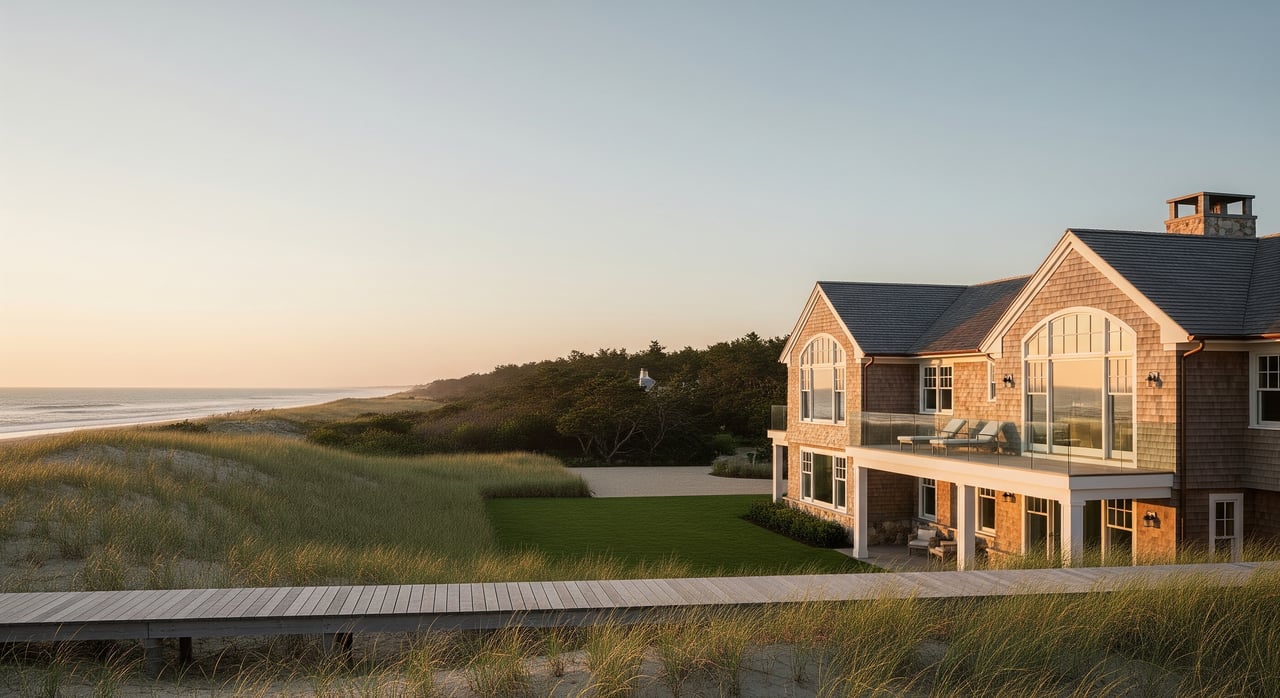
- Beachfront cottages and raised seaside homes on pilings
- Bayfront properties, often with docks or access to boating
- Renovated contemporaries and larger luxury builds on select lots
- Some smaller non-waterfront cottages closer to the Highway
Price expectations (approximate, 2024)
- Modest cottages or older non-waterfront homes south of the Highway often start around the high six-figures and run into the low millions depending on size and proximity to water.
- Direct oceanfront or fully modernized homes are typically several million dollars. Custom oceanfront estates can reach much higher.
These are broad, illustrative ranges and can shift with the market. Always verify current pricing with the local MLS and your agent.
Key tradeoffs and checks
- Flood and insurance: Many south-side parcels fall in FEMA flood zones. You may need elevated living areas and flood insurance.
- Coastal permitting: Dune work, septic placement, and major renovations often trigger added approvals.
- Seasonality: Expect higher summer traffic and parking rules near beaches.
North of the Highway: lifestyle and housing
Everyday living and feel
North of Montauk Highway, you trade direct ocean frontage for space, trees, and calmer streets. It is generally quieter with a more year-round rhythm. You will drive to the beach, but you gain larger lots and more privacy compared to many south-side blocks.
Typical home types
- Ranches, split levels, and colonials on larger parcels
- Newer construction on acreage, including wooded and semi-rural settings
- Properties with accessory structures or room to expand, subject to zoning
Price expectations (approximate, 2024)
- Many inland homes range from the mid‑six‑figures to the low‑seven‑figures.
- Larger or newer homes on generous acreage can reach the mid‑seven‑figures depending on finishes and land.
Key tradeoffs and checks
- Commute and services: You are set back from dune areas but farther from oceanfront amenities.
- Utilities: Some pockets rely on well water and private septic systems.
- Project potential: Expansion can be possible, but confirm setbacks and local rules.
Hamlet center and Highway corridor
Convenience and balance
Along Montauk Highway and near the hamlet center, you are close to shops, services, and dining. This corridor offers a balanced lifestyle with reasonable beach access by car and a mix of seasonal and year-round residents.
Typical homes and pricing (approximate, 2024)
- Single-family colonials, ranches, bungalows, and renovated homes on modest lots.
- Pricing has historically spanned mid‑six‑figures to mid‑seven‑figures, with well‑updated properties commonly in the $1M–$2M range depending on condition and lot size.
Lifestyle comparison at a glance
- Beach access: South offers immediate or near‑immediate beach proximity. North requires a short drive but avoids surf and dune exposure.
- Noise and seasonality: South sees more summer activity and visitors. North tends to feel calmer and more year‑round.
- Privacy and lot size: North often delivers larger lots and more tree cover. South can be denser near the shore.
- Services and errands: The hamlet center along Montauk Highway provides the most convenience for day‑to‑day needs.
Commute and getting around
The Long Island Rail Road’s Montauk Branch serves the area, with Westhampton and Speonk as the typical nearby stations. Service varies by season, and off‑peak frequency is lower. Train trips to Penn Station can run around 2 to 3 hours depending on schedules and transfers.
Driving times to the city commonly land in the 2 to 3 plus hour range depending on traffic and season. Summer congestion can add time. Proximity to Sunrise Highway, Montauk Highway, and Long Island MacArthur Airport in Islip can influence your commute and weekend plans.
Flood, permits, and property condition
Coastal parcels south of the Highway are more likely to be in FEMA flood zones, which can mean elevating utilities and carrying flood insurance. Always confirm a property’s flood status on current FEMA maps and review Town of Southampton floodplain rules.
If you plan to renovate or build, coastal construction rules, wetland setbacks, and septic upgrades may apply. Many East End homes use private septic systems, and upgrades can be triggered by permits. Factor these items into your budget and timeline early.
Rentals, beaches, and village rules
Short‑term rental rules vary between the Town of Southampton and nearby villages such as Quogue. Some municipalities require registrations or limit stays. Beach access and parking can also require specific permits, and rules often tighten in peak season. If rental income is part of your plan, review local codes and allowed uses before you buy.
How to choose your side
Use your daily life and budget as your guide:
Clarify your priorities. If you want a true beach‑house lifestyle, start south of the Highway. If space, privacy, and a quieter setting matter most, look north.
Map your routine. Note commute routes, grocery stops, and beach drives you will make weekly.
Right‑size your budget. As of 2024, expect a premium for oceanfront and near‑water locations. Inland homes often stretch your dollar further.
Check risk and rules. Pull flood maps, discuss insurance, and understand any coastal or wetlands permitting for the properties you like.
Plan for the future. If you want to expand or add amenities, confirm zoning, septic capacity, and utility options for the parcel.
When you are ready to compare specific streets, micro‑areas, and active listings, a local, hands‑on advisor makes all the difference. For tailored insights and on‑the‑ground guidance in East Quogue and the western Hamptons, connect with the The Hampton Edge Team.
FAQs
What does “south of the Highway” mean in East Quogue?
- It refers to neighborhoods between Montauk Highway and the Atlantic, including Dune Road and nearby bayfront and oceanfront areas.
Is north of the Highway better for year‑round living?
- Many year‑round residents prefer the quieter, less seasonal feel north of the Highway, though well‑updated south‑side homes can work for year‑round living too.
How much more does ocean proximity cost in East Quogue?
- Beachfront and near‑water homes carry a significant premium, often reaching several million for direct oceanfront. Inland homes are usually more affordable.
Do I need flood insurance in East Quogue?
- Many south‑side properties are in FEMA flood zones and may require flood insurance. Always verify a specific property’s designation on the latest maps and with your lender.
What are typical home types on each side of the Highway?
- South features raised seaside homes, cottages, and luxury builds near the water. North features ranches, colonials, and newer construction on larger lots.
Where can I find the most convenient day‑to‑day location?
- The hamlet center along Montauk Highway places you near shops and services, with beach access by car and a mixed seasonal and year‑round feel.